Hong Kong Tokenised Public Funds: What 24/7 Secondary Trading Requires
On 26 October 2026, Hong Kong’s Securities and Futures Commission confirmed that secondary trading had begun in two existing authorised tokenised money market funds: the ChinaAMC HKD Digital Money Market Fund and ChinaAMC USD Digital Money Market Fund. The SFC announcement described trading as available around the clock.
This implements the framework introduced on 20 April. It does not open every Hong Kong tokenised public fund to continuous trading. Managers and platform partners should establish which product, share class, entity and arrangement each approval covers.
Updated: 5 November 2026
What investors can actually trade
The manager’s notice dated 23 October identifies Class F HKD and Class F USD as the relevant classes, initially trading on PantherTrade, operated by Panthertrade (Hong Kong) Limited. Other tokenised classes do not automatically acquire the same access.
Primary subscriptions and redemptions follow the fund’s dealing process. Secondary trading transfers existing interests between market participants at a market price, without requiring the manager to redeem each seller’s holding.
The manager’s notice preserves primary dealing under the prospectus. It also makes access through a connecting broker subject to that broker’s trading hours. A product described as trading 24/7 may therefore have different access conditions across channels.
Separate the product from the permissions
The SFC’s tokenisation circular applies a see through approach: tokenisation represents ownership in an investment product, while the underlying product remains subject to its authorisation requirements.
Before designing a launch, map the following layers separately:
| Layer | Question to resolve |
|---|---|
| Fund and share class | What product and tokenisation arrangements have been authorised? |
| Management company | Is it eligible to manage the public fund, with adequate people and oversight? |
| Distributor or adviser | Which entity sells, recommends or arranges the investment? |
| Trading platform | Which licensed operator runs matching and accepts the product? |
| Connecting broker | Who routes orders and maintains the investor relationship? |
| Technology and custody | Who maintains ownership records, safeguards access and reconciles positions? |
Under the SFC’s activity based licensing framework, securities dealing, advice and asset management commonly involve Types 1, 4 and 9 respectively, subject to the actual activities and applicable exemptions. Public fund management eligibility and product authorisation are additional questions.
A Type 9 licence alone does not authorise a public fund launch, distribution business or trading platform. Likewise, a technology supplier’s contract cannot confer regulated permissions. FinPro Consulting’s Hong Kong SFC licence application service starts with this allocation of functions.
For VATPs, the SFC distinguishes two regimes: automated securities token trading falls within Types 1 and 7 under the Securities and Futures Ordinance; exchange services for tokens that are not securities fall within the AMLO regime. The SFC considers dual licensing appropriate to accommodate possible changes in token classification. The relevant permissions should be checked separately.
Pricing: an indicative NAV is a reference
The issuer says iNAV generally updates at least every 15 seconds, subject to trading suspension. It also identifies daily iNAV interruptions of about five minutes: approximately 23:45 to 23:50 Monday to Saturday and 23:30 to 23:35 Sunday. Ad hoc Saturday system upgrades may interrupt iNAV for up to one hour. The notice does not state a time zone for these windows. Trading is subject to separate suspension provisions, including where iNAV cannot be reliably calculated.
iNAV, official NAV and executable prices differ. For example, buying at HK$101 when iNAV is HK$100 means paying a premium before transaction charges. This is a hypothetical example, not a quotation for either fund.
The secondary trading circular requires price deviation alerts and information about primary dealing alternatives. Primary orders remain subject to dealing windows and forward pricing, rather than execution at the iNAV displayed when an order is entered.
Paragraph 12(c) also requires controls against excessive fluctuations and manipulation, citing trading bands based on the last executed price with cooling off periods as an example. It does not prescribe one universal cooling off period.
For implementation, test stale data, missing timestamps and inconsistent values across interfaces. Decide who investigates a price feed failure and what customers see while it is being resolved.
Liquidity needs a workable exit route
Product providers should use best endeavours to arrange at least one market maker, including an arrangement for at least one to give three months’ termination notice. Platforms should monitor market maker performance. These safeguards do not guarantee an executable exit at NAV.
When evaluating a proposed partnership, ask for quotation commitments, available size, funding capacity and escalation contacts. Run a weekend scenario in which the principal market maker stops quoting. Identify who can activate a replacement and who can authorise a pause.
Also test movement between primary and secondary channels. An attractive trading screen has limited value if investors cannot complete the transfer needed to use their intended exit route.
Why 24/7 trading needs more than a matching engine
The April framework announcement specifically addresses trading beyond the normal hours of underlying securities markets. Keeping a platform open does not keep those markets, banks or every service provider open. Availability depends on whether the bank and the settlement route in question support the relevant hours.
Consider a Saturday sale. A buyer may be available while the seller’s preferred bank transfer route is closed. The commercial proposition therefore needs separate answers for order execution, settlement, redemption and withdrawal.
November 2026 update: 24/7 interbank settlement
On 2 November 2026 the HKMA announced that EnsembleTX, the pilot phase of Project Ensemble, now supports interbank settlement of tokenised deposit transactions in tokenised central bank money around the clock. The pilot previously settled through the HKD Real Time Gross Settlement system. Participation stands at 12 banks and 20 industry pioneers, and transactions to date have included tokenised money market funds.
This is an advance within a controlled pilot, not a market wide utility. It does not establish that every fund, platform, broker or bank has connected to that infrastructure. Managers and distributors should separate trading availability from interbank settlement, primary redemption and external withdrawal arrangements.
| Layer | What investors should check |
|---|---|
| Secondary trading | When orders can be matched through the selected platform or connecting broker, including suspension arrangements. |
| Interbank settlement | Whether the transaction uses a participating bank and an available settlement route. |
| Primary redemption | The fund’s dealing days, cut-off times, valuation process and payment timetable. |
| External withdrawal | When the platform or broker releases cash and when the receiving bank credits the investor’s account. |
For these products, the issuer notice says settlement between accounts maintained with the platform generally takes place within one hour, subject to platform rules. Broker processing may take longer. This is not a promise of external bank withdrawal within that time. A completed secondary market sale should not be described as a completed fund redemption or an external bank withdrawal.
Operational planning should identify the hours and dependencies for each step, including holidays. Test what happens when a trade succeeds but a subsequent transfer fails. Customer communications should explain the position without describing every stage as instant.
Disclosures must work in the actual customer journey
The regulatory framework covers product documents and trading interfaces, including client risk confirmation. For a practical review, read the KFS, prospectus, website, app and customer agreement together.
Check whether investors can identify the contracting entity, available share class, charges, settlement arrangements and suspension process before placing an order. Compare the broker’s screen with the platform’s screen. A warning that disappears during order routing leaves a material gap in the journey.
FinPro’s financial website design service can support entity information, document access and disclosure structure. The regulated operator remains responsible for its trading controls and regulatory obligations.
Ownership, custody and recovery
The tokenisation circular leaves product providers ultimately responsible for operational soundness and ownership records despite outsourcing. Its requirements also address cybersecurity, recovery and business continuity.
The SFC’s guidance for intermediaries handling tokenised securities describes tokenised securities as fundamentally traditional securities with a tokenisation wrapper, so securities requirements continue to apply when they trade on a VATP.
Trace an investor position through fund, platform and broker records. Check discrepancy resolution, privileged access, key management, smart contract changes and recovery evidence. A successful blockchain transfer alone does not establish that all records agree.
Partner and acquisition due diligence
For a new partnership, request evidence supporting the exact proposed activities. For an acquisition, add historical complaints, incidents, unresolved regulatory correspondence and dependencies on staff or suppliers who may leave.
A useful review file includes permissions and conditions, product documents, signed operating agreements, pricing exceptions, reconciliation breaks and results of contingency exercises. Check what survives a change of control and what needs further consent.
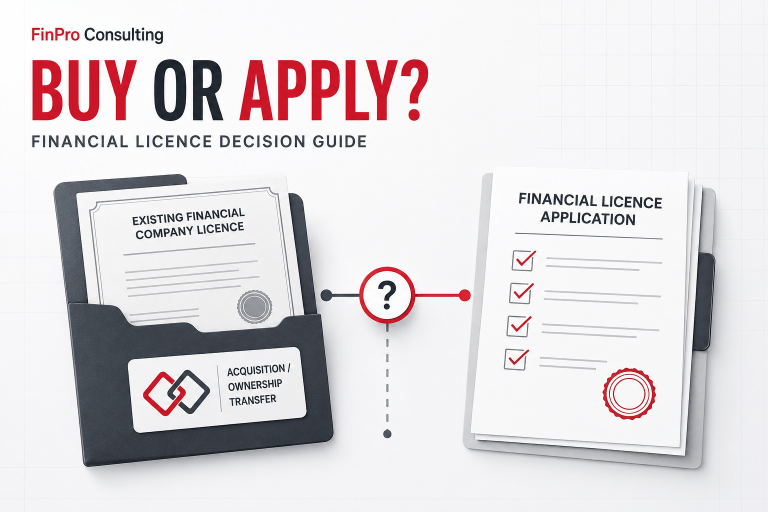
The broader commercial comparison is covered in buying a licensed company versus making a new application. The tokenised fund review should stay focused on the business the buyer actually plans to operate.
A practical launch checklist
The following is a suggested project sequence, not a substitute for applicable regulatory requirements:
- Map entities, investor journeys and asset and money movements.
- Record product approvals, entity permissions and outstanding regulatory engagement.
- Assign ownership of pricing, liquidity, custody, disclosures and incident decisions.
- Test normal dealing, weekends, failed transfers and service interruptions.
- Reconcile customer documents with the production interfaces.
- Preserve test evidence and approve a documented launch decision.
New products require prior SFC consultation. Introducing tokenisation features into existing authorised products requires consultation and approval under the secondary trading framework. Intermediaries should discuss their first secondary trading proposals with their case officers in advance.
The underlying fund rules remain relevant. Our retail fund code implementation article addresses that separate workstream.
How FinPro can support
FinPro Consulting can assist with business model and licence scoping, governance and disclosure reviews, provider coordination and transaction due diligence, working with Hong Kong legal and regulated specialists where appropriate.
To begin, share the proposed product, target investors, entities and transaction flow through our Hong Kong regulatory advisory service. FinPro does not operate a fund or VATP, provide SFC approval or guarantee platform acceptance.
Frequently asked questions
Is there a separate tokenised fund licence?
Hong Kong has not introduced a standalone tokenised fund licence. Product authorisation and activity based requirements still apply.
Can every Type 9 manager launch one?
No. Public fund eligibility, product approval and the proposed operating arrangements need separate assessment.
Can an unlicensed exchange offer this trading?
The retail platform route uses SFC licensed VATPs. OTC proposals are considered separately, rather than providing a general exemption.
Must secondary trades execute at NAV?
No. A market price may differ from NAV. iNAV is indicative.
What happens when underlying markets close?
Secondary trading may continue, but valuation inputs, available liquidity and operational support need particular attention.
Can all funds trade 24/7 or settle in stablecoins?
No. Product and channel approvals remain specific. The April framework contemplates regulated stablecoins and tokenised deposits, but the October launch does not itself authorise any particular settlement asset.
This article provides general information as at 29 October 2026. It is not legal, regulatory or investment advice.