From Video KYC to National Trust Bank Charters: Key Regulatory Signals for H2 2025

October 2025 delivered two moves that neatly capture how global supervision is evolving: India’s International Financial Services Centres Authority (IFSCA) said it plans to introduce video based KYC guidelines for non‑resident onboarding by November, while in the United States Crypto.com submitted an application to the Office of the Comptroller of the Currency for a National Trust Bank Charter. Read together, these signals show regulators demanding stronger governance and auditability while simultaneously enabling smoother customer journeys. The direction of travel is not “looser” or “stricter” in isolation; it is both, depending on where firms sit on the spectrum of control, technology assurance, and customer experience.
For cross border fintechs, EMIs, brokers, and crypto adjacent players, the practical implication is straightforward. When remote onboarding becomes regulator blessed—as India is poised to do inside GIFT City—conversion improves and acquisition costs fall, provided firms can demonstrate robust identity assurance. Conversely, when institutions seek bank grade oversight for digital asset services—as a national trust charter would provide in the U.S.—the compliance bar rises alongside addressable market size. Institutional buyers, treasury teams, and fiduciaries often require federal or equivalent supervision. In other words, customer growth and license gravity are converging; the winners will productize compliance rather than bolt it on.
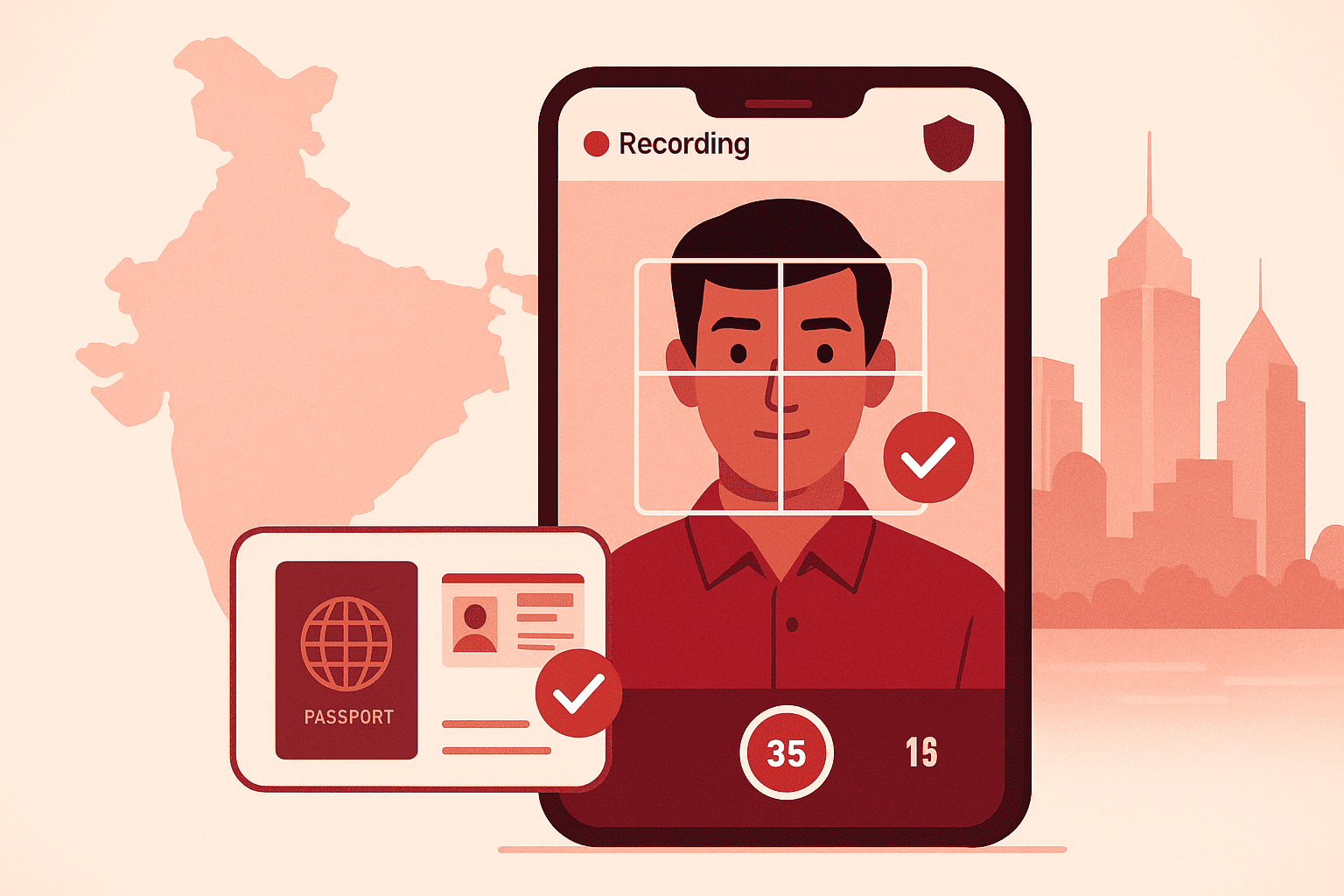
The Indian development matters because video KYC, if grounded in rigorous liveness checks, tamper evident recordings, and verifiable audit trails, shortens the distance between a prospect and an activated account, especially for NRIs who would otherwise battle apostilles and in person verifications. It also forces a rethink of vendor selection: not all providers are equal on facial biometrics, document OCR accuracy, or sanctions/PEP screening depth. If IFSCA’s final circular mirrors global best practice, firms will need to specify data residency, retention periods for video sessions, consents, multilingual scripts, and fallback pathways for edge cases. These are design decisions, not policy footnotes, and they influence everything from call centre staffing to dispute handling and regulator inquiries.
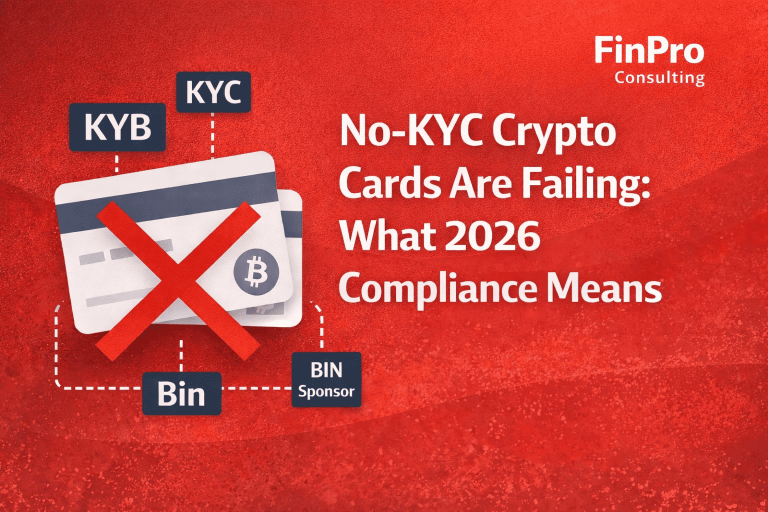
The U.S. scene is different but complementary. A National Trust Bank Charter is neither a shortcut to universal banking privileges nor a mere brand upgrade. Trust banks are specialized institutions with defined activities and capital expectations. What they offer is clarity: a supervisory home, federal standards for safeguarding client assets, and a framework that may unlock mandates from institutions that will not transact outside bank regulated custody. For digital asset infrastructure providers, that clarity can be the difference between piloting in a sandbox and scaling into production with asset servicing workflows, SOC attested controls, and board approved risk appetites. It also imposes discipline; governance, technology risk management, and outsourcing oversight will be examined in detail, and deficiencies will be surfaced early.

Neither trajectory is risk free. Guidance evolves between announcement and implementation, and firms that implement to the press release rather than the final instrument often face rework. Video KYC in particular concentrates model risk: liveness detection has to defeat spoofing at scale; document capture must handle low light, low bandwidth realities; and mismatch handling must be consistent enough to withstand audit. Meanwhile, the trust‑bank route can be mis scoped if leadership assumes it is equivalent to a full commercial bank. It is not. Business models, capital plans, segregation of client assets, and conflict of interest controls need to be tailored to the trust perimeter. Speed, by itself, is not a strategy; without the capacity to evidence controls—training logs, exception queues, reconciliations, and incident runbooks—speed becomes a liability in examinations.
What should operators do now? Start by mapping onboarding journeys by customer segment and jurisdiction, then test those journeys against the capabilities of your current vendors. If your target markets include NRIs or other cross border users, simulate the entire video KYC path in real conditions and quantify drop offs driven by latency, camera quality, or language coverage. Revise data governance to reflect the reality of video artefacts—where they live, how long they are kept, who can access them, and under what authority they are shared with regulators. In parallel, revisit your licensing roadmap. If institutional custody or fiduciary services are strategically core, model three pathways—build, partner, or acquire—with explicit capital needs, time to approval assumptions, and operating cost envelopes under trust‑bank governance. These are board level decisions that should be accompanied by refreshed risk appetite statements and updated compliance program documents spanning AML/CFT, technology risk, and outsourcing oversight.
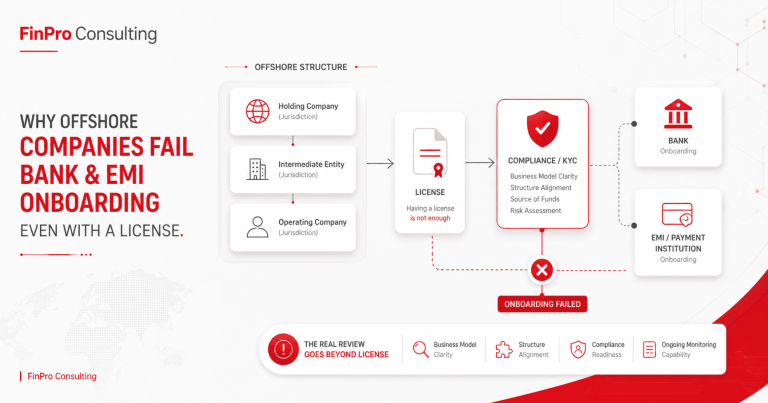
FinPro Consulting’s role in this environment is to translate regulatory motion into commercial momentum. We work with banking partners that are receptive to well governed financial‑industry clients and offer account opening advisory for offshore companies, brokerages and trading firms, and compliance first crypto businesses. Our support covers jurisdiction fit, documentation assembly, KYC positioning, and the cadence of ongoing compliance so relationships can be sustained long after the first account is opened.
India’s push toward video KYC indicates a willingness to simplify customer entry without compromising standards; the OCC pathway being pursued for a national trust charter points to bank‑grade custody expectations becoming the norm for institutions that touch digital assets. Firms that internalize both messages—designing onboarding as a controlled, measurable flow and treating supervision as an enabler rather than a hurdle—will be positioned to grow faster, spend smarter, and withstand scrutiny when it arrives.