Hong Kong’s 2025 Company Boom and What It Means for 2026 Registrar Compliance
If you listened to the rumors a few years ago, the narrative was that Hong Kong might lose its edge as a global corporate hub. The actual data from the Companies Registry tells a very different story.
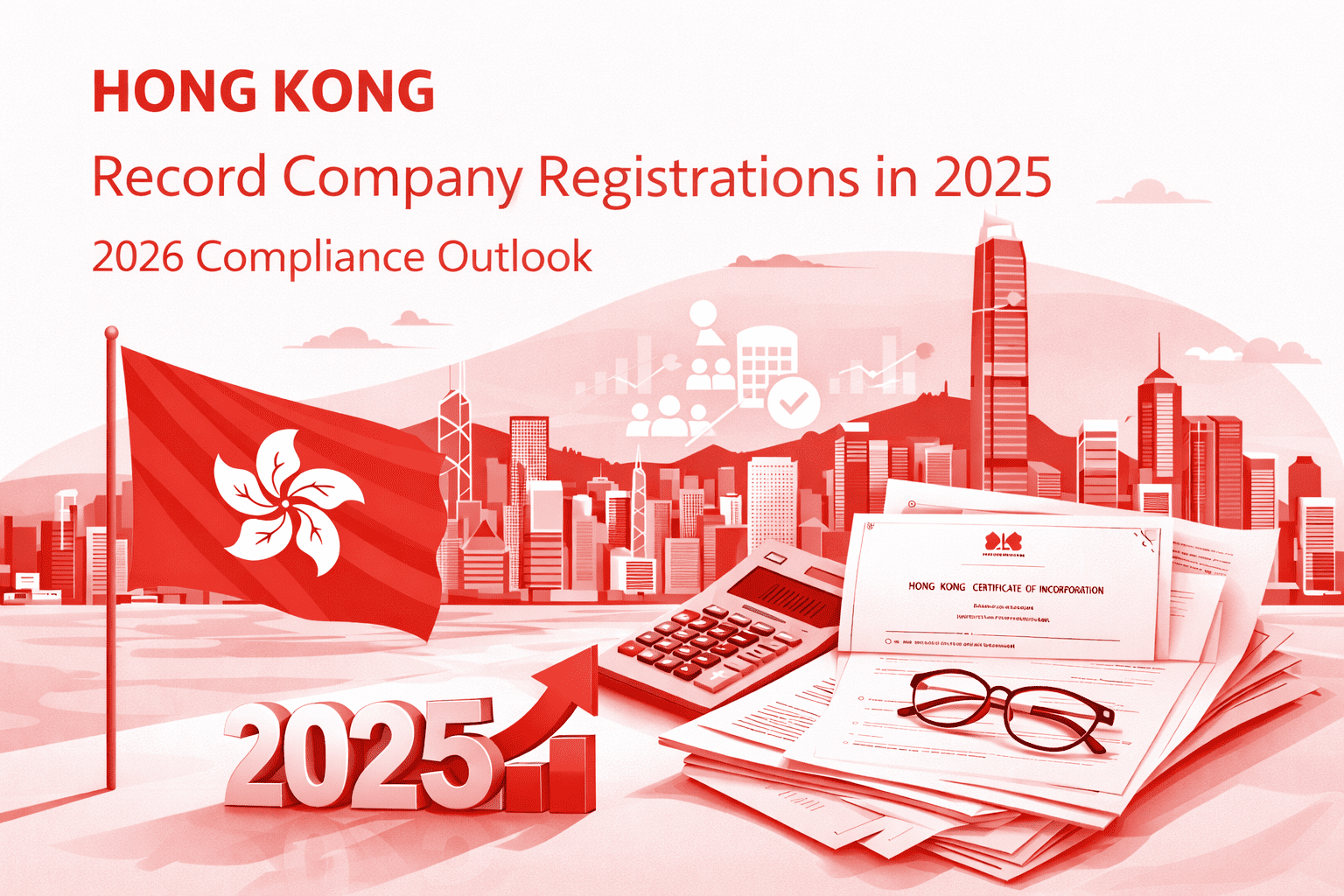
In early 2026, the Registry released the official figures for the previous year, and the numbers are compelling. With over 1.55 million companies now on the register and a surge in new incorporations, 2025 wasn’t just a recovery year; it was a year of aggressive expansion.
For the readers of FinPro Consulting—corporate secretaries, compliance officers, and business advisors—this growth is great news. But volume brings complexity. As we settle into 2026, the influx of new entities (including those moving here from offshore) is going to place massive pressure on compliance workflows.
The Data: A Surge in Local and Non-Hong Kong Firms
The headline figure is the volume. The total number of local companies registered under the Companies Ordinance reached 1,430,758 by the end of 2025. When we look at the flow of new business, the registry recorded 195,343 new local companies in just 12 months.
But the story isn’t just about local startups. We are seeing a sustained rise in non-Hong Kong firms establishing a place of business here. There are now 15,586 registered non-Hong Kong companies, a clear signal that international brands still view the city as the primary gateway to Asian markets.
Perhaps the most interesting trend for corporate service providers is company re-domiciliation.
For decades, businesses flocked to jurisdictions like the Cayman Islands, Bermuda, or Luxembourg. However, as global tax standards tighten and economic substance laws become stricter, the tide is turning. In 2025, we saw the first wave of re-domiciled entities migrating their legal homes from these traditional offshore havens directly to Hong Kong.
This “onshoring” trend validates the new re-domiciliation regime, but it also means that service providers are now handling much more complex entity structures than the standard private limited company we are used to seeing.
The Compliance Challenge: Volume Equals Scrutiny
While the business development teams are celebrating the boom, the compliance teams need to be vigilant. A sudden spike in corporate registry trends usually triggers a regulatory response.
With 1.55 million active companies, the Companies Registry and law enforcement agencies will inevitably tighten their nets regarding statutory filings and Anti Money Laundering (AML) controls.
Here is where the friction points will be in 2026:
Beneficial Ownership Accuracy
The days of silent partners are effectively over. With the influx of complex structures from jurisdictions like the BVI or Cayman, identifying the ultimate beneficial owner (UBO) is harder, yet more critical. The Registry is placing renewed emphasis on the Significant Controllers Register (SCR). If you are onboarding these re-domiciled firms, your due diligence process needs to be forensic, not just a tick-box exercise.
The Risk of “Cloaking”
High registration volumes can sometimes hide bad actors. Shell companies used for cloaking illicit funds often slip in during boom periods. Compliance officers must look for red flags such as generic business addresses, directors with excessive appointments, or circular ownership structures that seem to lead nowhere.
Filing Fatigue
More clients mean more deadlines. The sheer volume of Annual Returns and notification of changes (ND2A, ND4) increases the risk of clerical error. In 2026, missing a filing deadline isn’t just a small administrative fine; it flags your client (and potentially your firm) for deeper audit scrutiny.
Action Plan for 2026
So, how do you capitalize on the Hong Kong business migration without drowning in paperwork?
- Audit Your Portfolio: Segment your clients by entity type. Local SMEs have different risk profiles compared to a re-domiciled holding company from Luxembourg. Allocate your senior compliance talent to the latter.
- Tech Alignment: If you are still managing filing deadlines on a spreadsheet, you are at risk. With the Registry pushing for full electronic filing, your internal systems must sync directly with the e-Registry to ensure real-time accuracy.
- Standardize the Onboarding: Update your KYC protocols to specifically address the nuances of incoming offshore entities. You need to know exactly where that capital originated before it landed in Hong Kong.
What this means for FinPro clients and How We can help
Hong Kong’s record numbers are a positive indicator. They show that the city remains attractive as a base for international business. At the same time, the compliance standard expected by banks, auditors, and counterparties is moving in one direction: more transparency, more consistency, and fewer excuses for weak governance.
If you are using Hong Kong as part of an offshore backed structure, 2026 is a good year to tighten the basics before you are forced to do it under pressure. For many groups, the cost of upgrading governance and documentation now is far lower than the cost of dealing with a banking freeze, a failed account opening, or a messy corporate clean up later.
FinPro Consulting supports clients across incorporation and restructuring, redomiciliation planning, ongoing corporate maintenance, and bank and EMI onboarding. If you are preparing a Hong Kong entity for 2026 and want it to be easy to maintain and easy to bank, send FinPro a brief company profile plus basic information on shareholders and directors. We will review the structure and business model, identify likely friction points, and propose a practical plan to improve the probability of successful account opening and smooth ongoing compliance.