Year End Compliance Crunch: Why 2026 Will Be Tougher for Offshore Backed Structures
For years, the offshore corporate world operated on a cycle of gradual regulatory updates. However, as we head into 2026, the landscape has shifted fundamentally. We are moving from an era of rule making to an era of aggressive enforcement.
For founders and investors utilizing cross border structures, offshore company compliance 2026 represents a critical turning point. The grace periods for major legislative overhauls—such as the UK’s Economic Crime and Corporate Transparency Act (ECCTA)—are ending. Simultaneously, traditional offshore financial centers (OFCs) are under immense pressure from the FATF and the EU to prove they are not just passing laws, but actively policing them.
At FinPro Consulting, we are seeing a clear trend: the “compliance crunch” is real, and it is hitting passive structures the hardest. Here is why 2026 will be the year of enforcement and what you must do to prepare.
UK Companies House: Identity Verification Goes Live
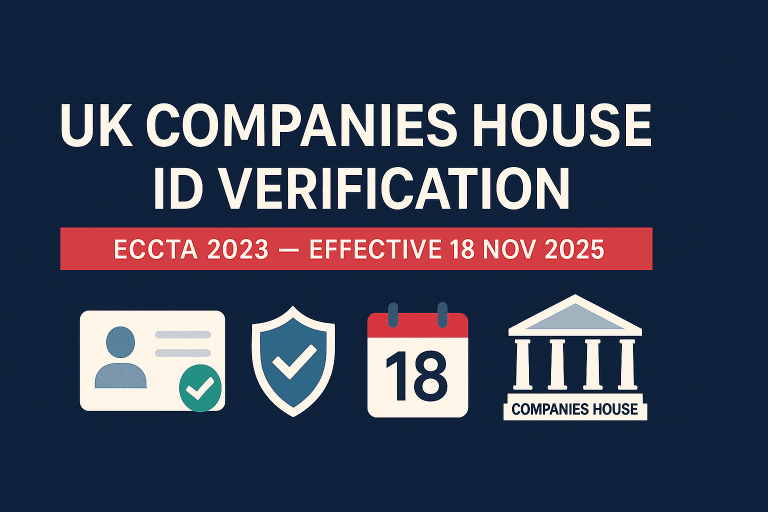
The most immediate shockwave for offshore structures with UK ties is the operationalization of the ECCTA. The UK Companies House is transforming from a passive registry into an active gatekeeper with significant enforcement powers.
A major pillar of this change is UK Companies House ID verification. By 2026, the transition period for verifying the identity of all directors and Persons with Significant Control (PSCs) will likely conclude, shifting to strict penalties for non compliance.
- For Direct Directors: New directors cannot be appointed until their identity is verified.
- For Offshore Entities: If your offshore company holds UK property or land, the Register of Overseas Entities (ROE) requirements are tightening. The days of hiding ultimate beneficial ownership behind complex nominee layers are gone. Failure to update ROE filings now leads to severe restrictions on selling or leasing that property.
The Substance Test: From Paperwork to Presence
A few years ago, Economic substance requirements (ESR) were a new concept that many providers addressed with “tick box” solutions. As we head into 2026, regulators in jurisdictions like the BVI, Cayman Islands, Mauritius, and Labuan are auditing these filings with far greater scrutiny.
Regulators are no longer satisfied with a board resolution signed remotely. They are asking harder questions:
- Where are the “Core Income Generating Activities” (CIGA) actually taking place?
- Does the entity have adequate local expenditure and qualified employees relative to its income?
- Is the “mind and management” truly present in the jurisdiction?
For investment holding companies, the requirements are lighter, but for entities claiming trading income or IP rights, the bar is high. We are seeing an increase in audit queries and penalties for entities that cannot prove substance beyond a registered address.
Banking: The Narrowing Gate
Perhaps the most practical pain point for businesses is offshore banking KYC (Know Your Customer).
Banks and Electronic Money Institutions (EMIs) are the de facto enforcers of global compliance. Even if a registry hasn’t struck off a non compliant company yet, a bank’s internal compliance team will likely freeze the account first.
As we look toward 2026, financial institutions are “derisking” aggressively. They are offboarding clients who:
- Have complex ownership structures without clear economic rationale.
- Cannot provide up to date Certificates of Incumbency or Good Standing immediately.
- Reside in jurisdictions that have recently been grey listed or are under increased monitoring.
If your corporate secretary is slow to respond to compliance queries, your banking access is the first casualty.
Global Regulatory Enforcement: The Strike Off Risk
Global regulatory enforcement is becoming synchronized. Tax authorities, registries, and financial intelligence units are sharing data more efficiently than ever before (thanks to CRS and FATCA).
In 2026, we expect to see an acceleration in administrative strike offs. Registries are clearing out “dead wood”—companies that are in arrears on fees or late on filings.
Why is this dangerous? If your company is struck off while holding assets (IP, shares in a subsidiary, or bank balances), those assets technically become bona vacantia (property of the Crown or the State). Restoring a company after strike off is expensive, time-consuming, and instantly raises red flags with banking partners.
Strategic Next Steps: Future Proofing for 2026
The “compliance crunch” is not about penalizing legitimate business; it is about filtering out opacity. To survive and thrive in 2026, your structure must be transparent and defensible.
The FinPro Consulting Action Plan:
- Conduct a Health Check: Don’t wait for the annual renewal notice. Review your structure now. Are all filings up to date? Is your beneficial ownership data accurate?
- Verify Substance: If you are booking significant revenue in an offshore center, ensure your economic substance aligns with reality. If not, consider re-domiciliation or restructuring.
- Pre-empt the ID Checks: If you interact with the UK, get your ID verification documentation ready for Companies House now to avoid bottlenecks later.
- Engage Proactive Intermediaries: If your current provider sends you an invoice once a year but never updates you on regulatory changes, you are at risk.
2026 will be a difficult year for structures built on the “old rules.” However, for businesses that prioritize good governance and transparency, it offers a competitive advantage—streamlined banking, easier deal execution, and a reputation for reliability.
Don’t let regulatory debt accumulate.
Is your corporate structure ready for 2026? Contact FinPro Consulting today for a comprehensive compliance review and ensure your business remains in good standing across all jurisdictions.