2026 Mauritius Financial License: How the FSC’s New “KTC” Framework Accelerates Your Application
In the rapidly evolving macroeconomic landscape of 2026, global regulatory compliance is tightening across all major jurisdictions. For forex brokers, fund managers, and fintech enterprises seeking offshore regulatory frameworks, the biggest challenge is no longer just compliance—it is Time to Market. How can financial institutions maintain the highest regulatory standards while accelerating their operational launch?
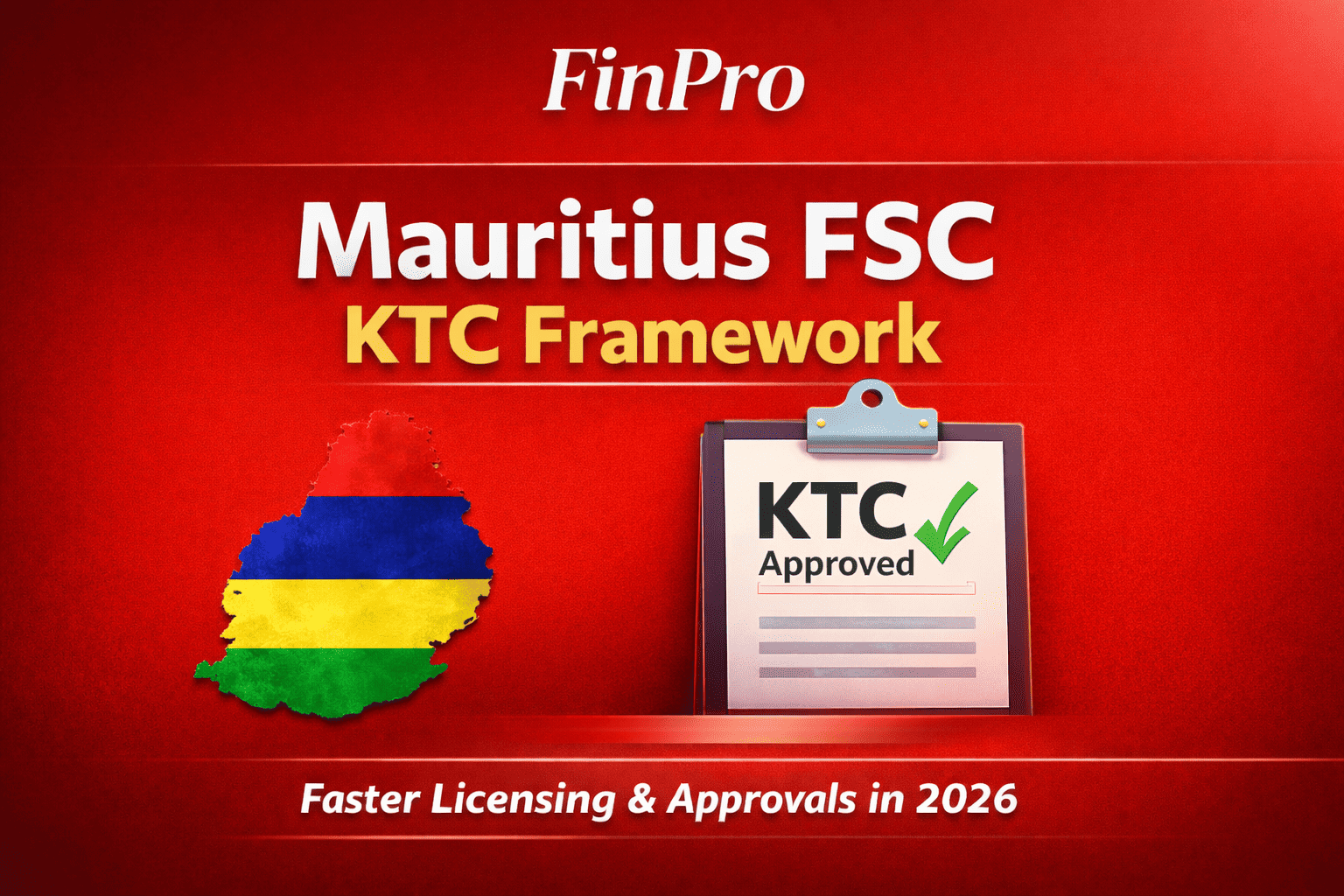
As one of the world’s premier international financial centers, the Mauritius Financial Services Commission (FSC) has recently rolled out its highly anticipated “Known to the Commission” (KTC) framework. For institutions planning or expanding their global financial footprint in 2026, this represents a major strategic advantage. In this article, FinPro Consulting explores the operational logic of the KTC framework and how it is reshaping the pathway to obtaining a Mauritius financial license.
What is the Mauritius FSC “KTC” Framework?
Traditionally, applying for an offshore financial license (such as an Investment Dealer License or Global Business Corporation – GBC) requires the regulatory body to conduct rigorous, from scratch due diligence on the company’s directors, shareholders, and Ultimate Beneficial Owners (UBOs). This is a mandatory step, regardless of whether the entity has previously operated within the jurisdiction.
The Known to the Commission (KTC) mechanism fundamentally streamlines this process. Simply put: If you, or the core members of your institution, already possess a solid compliance track record and have previously passed FSC background checks, the Commission will rely on this verified data for new applications. This significantly reduces the need for redundant documentation and repetitive due diligence when applying for new licenses or establishing new corporate structures.
3 Core Advantages of the KTC Framework for Financial Institutions
For businesses aiming to secure Mauritius regulatory backing in 2026, the KTC framework offers more than just a simplified administrative process—it delivers tangible commercial competitiveness:
Accelerated Approval and Faster Time-to-Market
In the financial trading markets, time equates to liquidity and profit. By eliminating redundant background checks, the traditionally lengthy approval cycle is drastically compressed. Applicants meeting the KTC criteria can receive FSC approvals at an unprecedented speed, allowing them to set up trading infrastructure (such as integrating MT5 servers), aggregate liquidity, and commence client onboarding much faster.
Reduced Administrative and Legal Costs
The conventional KYC/KYB process—compiling apostilled passports, proofs of address, bank reference letters, and police clearance certificates—is both time consuming and expensive. The KTC framework’s “verify once, reuse multiple times” approach directly saves enterprises significant cross-border notarization fees and legal communication costs.
Smoother Bank and EMI Account Opening
In 2026, global banks and Electronic Money Institutions (EMIs) have implemented their strictest KYC screening protocols to date. Holding a KTC status with the Mauritius FSC effectively acts as a powerful “regulatory endorsement.” When institutions apply for corporate bank accounts or clearing facilities, this inherited trust from a top-tier regulator significantly increases the success rate of account opening and mitigates the risk of triggering dormant account reviews.
2026 Offshore Financial Strategy: Mauritius or Seychelles?
When structuring a licensing roadmap, many enterprises weigh the pros and cons of Mauritius versus Seychelles. In 2026, their respective positioning has become remarkably distinct:
- Mauritius: With the new KTC framework and a robust network of Double Taxation Avoidance Agreements (DTAAs), Mauritius is highly suited for high net worth wealth management, structured funds, and large scale traditional FX/CFD brokerages. Its financial ecosystem leans toward traditional stability and is highly regarded by major international banks.
- Seychelles: The Seychelles Financial Services Authority (FSA) has provided clearer regulatory guidelines for Virtual Asset Service Providers (VASPs). If your core business involves crypto derivatives, digital asset trading, or setting up an agile, lightweight forex brokerage, Seychelles remains the premier choice for balancing cost efficiency with operational flexibility.
Conclusion & Compliance Advisory
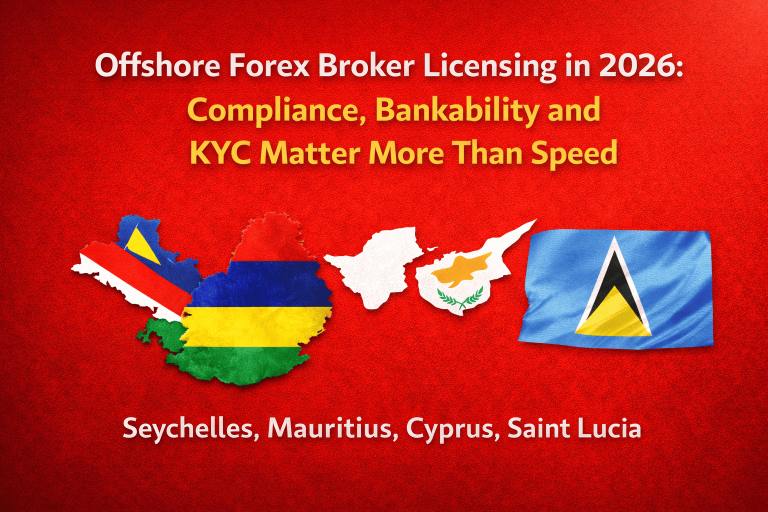
A regulatory license is more than a legal permit to operate; it is the ultimate testament to a financial institution’s credibility. The Mauritius FSC’s KTC framework opens a “green channel” for practitioners with a clean compliance history. However, whether you choose Mauritius, Seychelles, Cyprus, or St. Lucia, the key to a successful launch lies in understanding the regulator’s current preferences and proactively structuring your Bank/EMI accounts and embedded KYC systems to match.
Ready to accelerate your global financial business?
FinPro Consulting specializes in financial license applications across major global jurisdictions, company incorporation, Bank & EMI account opening, and the development of compliant financial websites and MT5 ecosystems. Backed by years of industry expertise, we provide an end to end solution from regulatory advisory to full operational launch.
Contact the FinPro Consulting Expert Team Today to secure your tailor made offshore financial compliance and licensing roadmap for 2026.